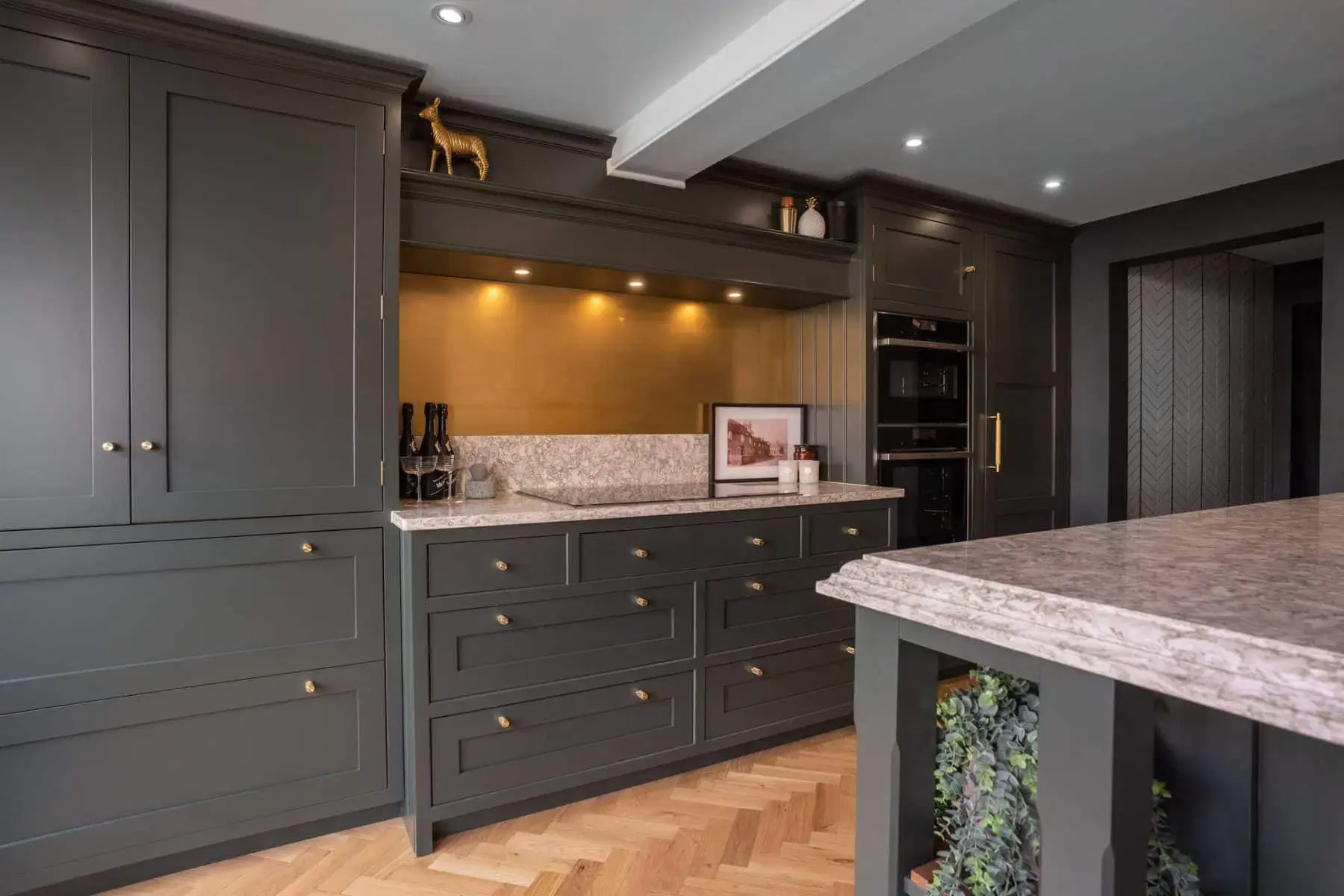
1. Insufficient Storage Planning
One of the most common mistakes is not planning enough storage. You may think you have plenty, but kitchens accumulate items over time. Plan for more storage than you think you need, including tall larders, deep drawers, and clever corner solutions.
Solution: Work with a designer to maximise every inch of space. Consider your current storage needs and plan for future growth.
2. Poor Workflow Layout
The kitchen triangle (sink, hob, fridge) is fundamental to good kitchen design. Placing these too far apart or in awkward positions creates an inefficient workflow that makes cooking frustrating.
Solution: Keep the triangle efficient—ideally 4-9 feet between each point. Consider how you move around the kitchen and design accordingly.
3. Inadequate Lighting
Many kitchens rely on a single overhead light, creating shadows and dark spots. Proper kitchen lighting requires multiple layers: task lighting for work areas, ambient lighting for general illumination, and accent lighting for atmosphere.
Solution: Plan lighting early in your design. Include under-cabinet lighting, pendant lights over islands, and dimmable ambient lighting.
4. Choosing Style Over Function
While aesthetics are important, prioritising looks over functionality leads to frustration. A beautiful kitchen that's difficult to use won't bring you joy long-term.
Solution: Balance style and function. Choose designs that look great AND work well for your lifestyle and cooking habits.
5. Not Considering Appliance Placement
Appliances need proper placement for ventilation, access, and workflow. Placing a fridge next to a heat source, or a dishwasher too far from the sink, creates problems.
Solution: Plan appliance placement carefully. Consider ventilation requirements, access for maintenance, and how appliances integrate with your workflow.
6. Skimping on Quality
Choosing the cheapest options often leads to problems down the line. Poor-quality cabinets, worktops, or appliances may need replacing sooner, costing more in the long run.
Solution: Invest in quality where it matters most. Premium cabinetry and worktops last decades. Plan your budget to include quality materials.
7. Ignoring Ventilation
Proper ventilation is essential for removing cooking odours, steam, and grease. Inadequate extraction leads to condensation, lingering smells, and grease buildup.
Solution: Invest in a quality extractor hood or Bora downdraft system. Ensure it's properly sized for your hob and kitchen size.
8. Not Planning for Future Needs
Your needs change over time. A kitchen designed only for current needs may not work as your family grows or lifestyle changes.
Solution: Consider future needs. Will you need more storage? More seating? Space for entertaining? Design with flexibility in mind.
9. Poor Worktop Choice
Choosing the wrong worktop material for your lifestyle leads to maintenance issues and disappointment. Some materials require more care than others.
Solution: Research worktop materials carefully. Consider your cooking habits, maintenance preferences, and budget.
10. Not Working with Professionals
DIY kitchen design often leads to mistakes that cost more to fix than professional design would have cost initially. Professional designers spot potential issues before they become problems.
Solution: Work with experienced kitchen designers. Book a consultation to benefit from professional expertise and avoid costly mistakes.
Avoiding these common mistakes ensures your kitchen renovation is a success. Contact us to discuss your kitchen project and get expert guidance from our experienced team.