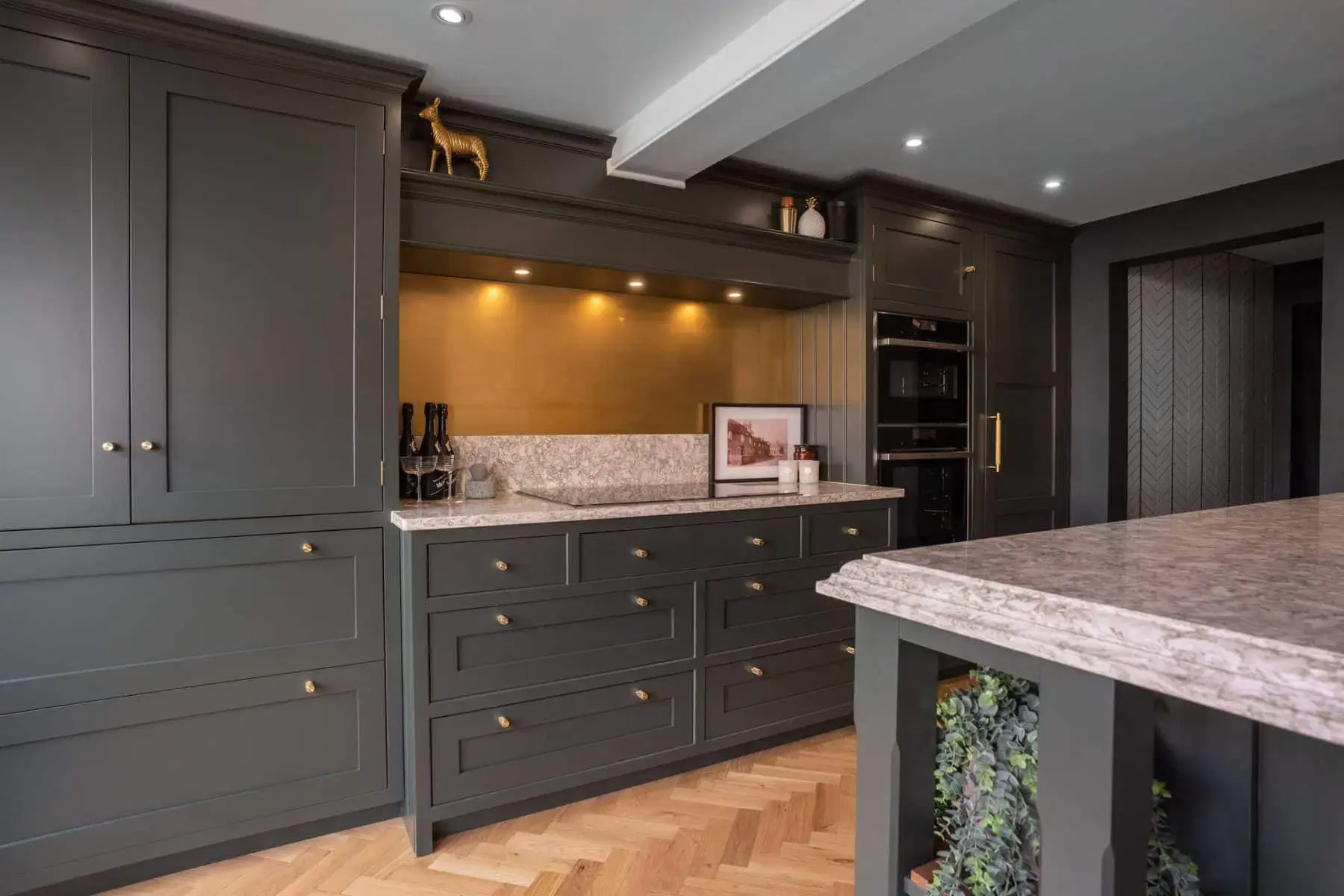
Understanding Kitchen Costs
A kitchen renovation involves multiple cost categories. Understanding these helps you allocate your budget effectively and avoid surprises. See our detailed kitchen prices guide for specific cost ranges.
Budget Allocation Guide
As a general rule, allocate your budget as follows:
Cabinetry & Units (30-35%)
The largest portion of your budget typically goes to kitchen units and cabinetry. This includes base units, wall units, tall storage, and any bespoke elements. Quality varies significantly, from budget-friendly options to premium German ranges like Häcker Systemat.
Appliances (15-20%)
Appliances can significantly impact your budget. Premium brands like AEG, Miele, and Gaggenau cost more but offer superior performance and longevity. Consider which appliances matter most to you and allocate accordingly.
Worktops (10-15%)
Worktop costs vary widely. Laminate is most budget-friendly (see our affordable worktops guide), while granite and quartz are premium options. Dekton offers ultra-compact performance at a higher price point.
Installation & Labour (15-20%)
Professional installation ensures your kitchen is fitted correctly and safely. This includes fitting units, connecting appliances, plumbing, and electrical work. Don't underestimate this cost—quality installation is essential.
Building Work (10-15%)
If your renovation includes structural changes, extensions, or significant building work, this will add to your budget. Kitchen extensions require additional planning and building costs.
Finishing Touches (5-10%)
Don't forget finishing touches: flooring, paint, tiles, lighting, and accessories. These details complete your kitchen but can add up if not budgeted for.
The Contingency Fund
Always include a 10-15% contingency fund for unexpected costs. These might include:
- Hidden structural issues discovered during renovation
- Electrical or plumbing updates required
- Additional building work needed
- Changes to your design during the process
- Unexpected material costs
Budgeting by Kitchen Size
Kitchen costs scale with size, but not proportionally. A larger kitchen doesn't necessarily cost twice as much as a smaller one, as some costs are fixed:
- Small kitchen (10-15m²): £15,000 - £25,000
- Medium kitchen (15-25m²): £25,000 - £40,000
- Large kitchen (25m²+): £40,000 - £70,000+
These are rough guides—actual costs depend on your choices and requirements.
Saving Money Without Compromising
There are ways to get value without sacrificing quality:
- Choose mid-range ranges like Concept130 for excellent quality at accessible prices
- Invest in quality where it matters most (cabinetry, worktops) and be flexible elsewhere
- Consider keeping existing appliances if they're in good condition
- Plan carefully to avoid costly changes mid-project
- Work with a designer to maximise space and efficiency
Getting Quotes
Always get detailed quotes that break down costs by category. This helps you understand where your money is going and compare options. Be wary of quotes that seem too good to be true—quality kitchens require quality materials and craftsmanship.
Book a consultation to discuss your budget and get a detailed quote for your kitchen project. We'll work with you to create a kitchen that meets your needs and fits your budget.