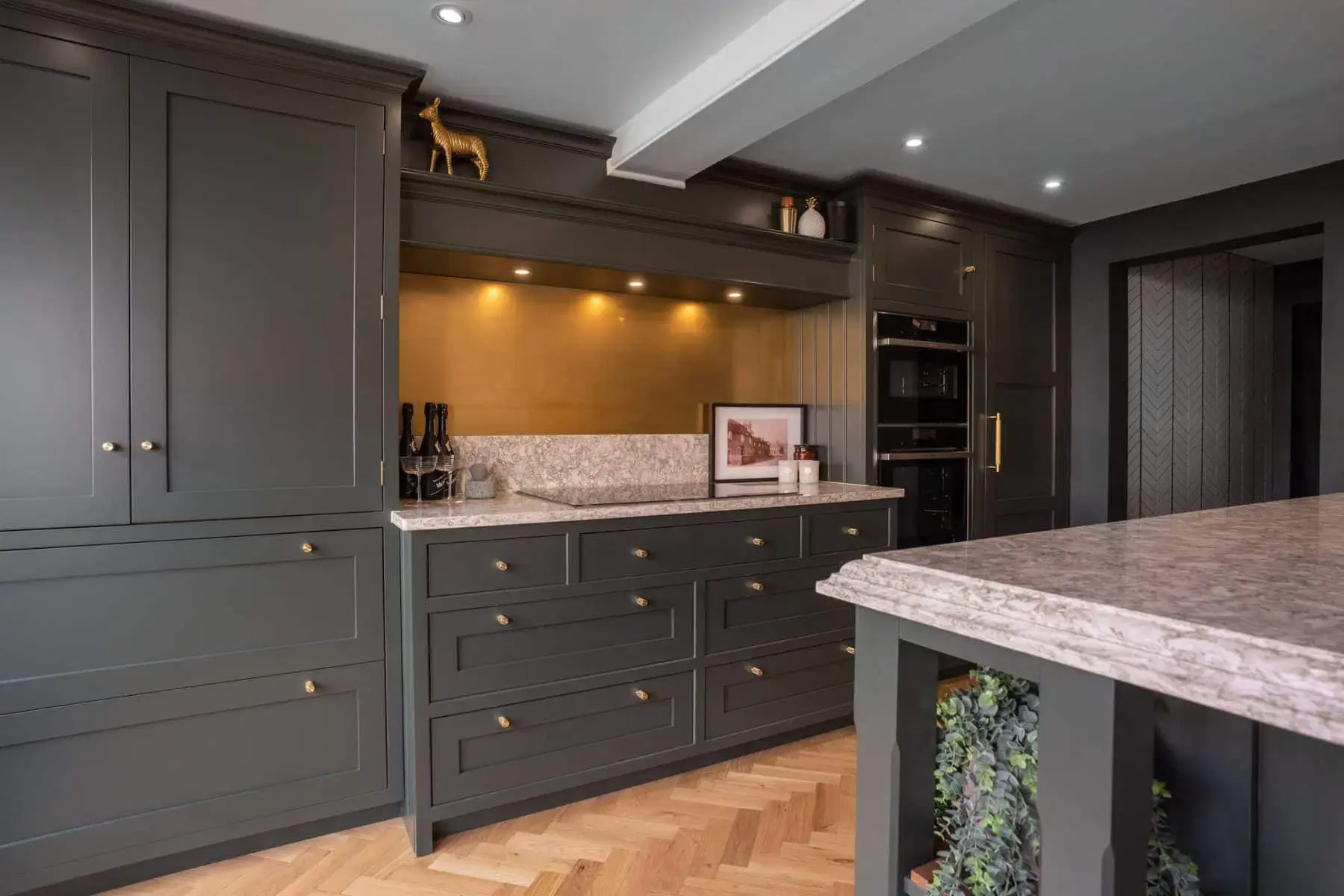
The Three Types of Kitchen Lighting
Effective kitchen lighting uses three layers: task lighting for work areas, ambient lighting for general illumination, and accent lighting for visual interest. Combining all three creates a functional and beautiful lighting scheme.
1. Task Lighting
Task lighting provides focused, bright light where you need it most—over worktops, sinks, and cooking areas. This is the most important layer for functionality.
Options include:
- Under-cabinet LED strips or spotlights
- Pendant lights over islands and breakfast bars
- Recessed downlights above worktops
- Integrated lighting within handleless rails
Task lighting should be bright enough to see clearly when chopping, cooking, and cleaning, without creating harsh shadows.
2. Ambient Lighting
Ambient lighting provides general illumination throughout the kitchen, creating a comfortable overall light level. This is your base layer of lighting.
Options include:
- Ceiling downlights distributed evenly
- Track lighting systems
- Wall-mounted lights
- Natural light from windows and rooflights
Ambient lighting should be dimmable, allowing you to adjust brightness for different times of day and activities.
3. Accent Lighting
Accent lighting adds visual interest and highlights specific features, creating depth and atmosphere.
Options include:
- LED strips in plinths (toe kicks)
- Lighting within glass-fronted cabinets
- Pendant lights as focal points
- Wall lights for decorative effect
- Profile lighting within handleless rails
Lighting by Kitchen Zone
Different areas of your kitchen need different lighting approaches:
Worktop Areas
Under-cabinet lighting is essential for worktops. LED strips provide even, shadow-free light. Consider dimmable options for flexibility.
Islands & Breakfast Bars
Pendant lights create focal points and provide task lighting. Consider multiple pendants for larger islands, or a single statement piece for smaller areas. Height should be 75-90cm above the surface.
Cooking Areas
Bright task lighting above hobs and ovens is essential. Consider extractor hoods with integrated lighting, or downlights positioned to avoid shadows.
Dining Areas
Softer, warmer lighting creates atmosphere for dining. Pendant lights or wall lights work well, with dimmers to adjust mood.
Smart Lighting Control
Modern kitchens increasingly use smart lighting systems that allow you to control lights via app or voice. You can create scenes for different activities—bright for cooking, softer for dining, dimmed for evening.
Smart lighting integrates with other smart home systems and can be programmed to adjust automatically based on time of day or natural light levels.
Planning Your Lighting
Lighting should be planned early in your kitchen design process, as it affects electrical work and cabinet design. We include lighting design in our kitchen design process, ensuring your lighting scheme works perfectly with your layout and cabinetry.
Book a consultation to discuss your kitchen lighting requirements, or view our projects to see lighting schemes in action.