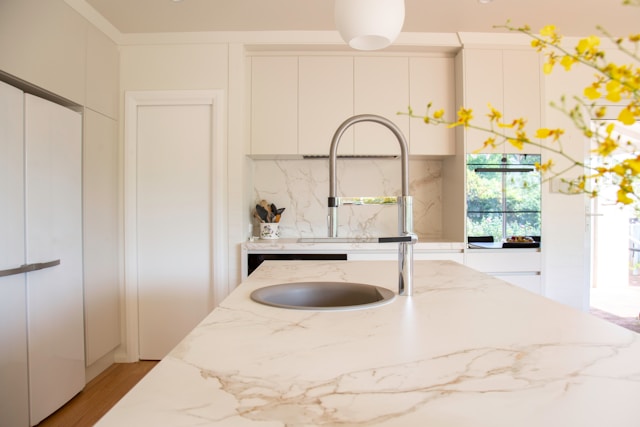
Worktops are the daily-use surface in your kitchen—where you prep food, set hot pans (sometimes without thinking), gather with friends, and showcase your design. In the UK, quartz, granite, and laminate remain the most popular choices, each with different costs, maintenance needs, and looks.
The right material depends on how you cook, entertain, and maintain your space. Below, we break down pros, cons, and real-world considerations so you can choose confidently.
Quartz Worktops: Style Meets Practicality
Quartz is engineered stone—around 90–95% natural quartz crystals combined with resins and pigments. It delivers a dense, non-porous surface available in marble-style veining, concretes, and uniform modern finishes.
- Low maintenance: Non-porous; no sealing; resists wine, coffee, and oil stains.
- Consistent appearance: Engineered for even colour and pattern—ideal for sleek modern schemes.
- Durability: Highly scratch- and chip-resistant in normal use.
- Design versatility: Works across minimalist, contemporary, and warm farmhouse palettes.
Consider: heat sensitivity (use trivets), mid-to-high price bracket, and faint seams on large runs.
Granite Worktops: Timeless Natural Beauty
Granite is quarried natural stone—every slab unique. It brings authentic character, depth, and a sense of permanence to luxury kitchens.
- Outstanding durability: Extremely tough; good for baking and moderate heat.
- Natural variation: One-of-a-kind veining and speckles for statement islands.
- Perceived value: Seen as a premium feature that can enhance resale appeal.
- Lifespan: Decades of use with correct care.
Consider: periodic sealing, heavy weight (professional install essential), higher cost, and pattern-matching across joins.
Laminate Worktops: Affordable and Versatile
Laminate pairs a printed decorative layer with a chipboard or MDF core and protective coating. Modern options convincingly mimic stone or timber at a fraction of the price.
- Budget-friendly: Ideal for first homes, rentals, or phased renovations.
- Lightweight: Faster, easier installs and simpler replacements.
- Design variety: Endless patterns, from marble effects to warm oaks.
- Low maintenance: No sealing; wipe with mild detergent.
Consider: lower heat and scratch resistance, not repairable after deep damage, shorter lifespan, and more visible joins.
Comparing Quartz, Granite and Laminate at a Glance
| Feature | Quartz | Granite | Laminate |
|---|---|---|---|
| Material type | Engineered stone | Natural stone | Printed laminate on composite core |
| Look | Consistent; wide colour range | Unique; every slab differs | Imitates stone, wood, solids |
| Durability | Very high | Extremely high | Low–moderate |
| Maintenance | No sealing | Seal every 1–2 years | Minimal |
| Heat resistance | Moderate | Very high | Low |
| Installed cost (approx.) | £300–£600 per m² | £400–£800 per m² | £50–£200 per m² |
| Best for | Modern, low-maintenance kitchens | Luxury, natural statements | Budget updates & rentals |
Pricing is indicative and varies by supplier, thickness, templating, and installation complexity.
Matching Worktops to Your Kitchen Style
- Modern & minimalist: Polished quartz or granite with clean edges; light tones to keep spaces open.
- Country & Shaker: Textured granite or warm stone/wood-effect laminates pair with framed doors.
- Contemporary family: Quartz balances durability with elegance; mid-tones hide crumbs yet reflect light.
- Landlords/budget: Quality laminate offers best ROI and easy replacement if worn.
Practical Considerations Before You Buy
- Usage habits: Heavy cooking or baking? Choose higher heat resistance (granite) or tough quartz.
- Maintenance: Prefer low upkeep? Quartz or laminate trump porous granite.
- Lighting & space: Dark tops can shrink small rooms; light tops brighten and balance glazing.
- Edge profiles: Square, bevel, or bullnose change the look—and in laminate, impact longevity.
- Installation quality: Professional templating and fitting are essential for seamless joins and lifespan.
Environmental and Sustainability Factors
- Quartz: Some ranges include recycled glass or reclaimed stone.
- Granite: Durable and long-lasting; locally sourced stone reduces transport impact.
- Laminate: Lower production energy; lightweight for transport, but not easily recyclable.
If sustainability matters, ask about eco-certified suppliers, recycled content, and local fabrication options.
The Installation and Aftercare Process
At Fareham Kitchens we template, fabricate, and install every worktop with precision:
- Templating: Exact measurements for corners, joins, sinks, and hobs.
- Fabrication: Quartz and granite cut, edged, and polished to the template.
- Installation: Professional fitting, sealing, and alignment for seamless joints.
- Aftercare: Cleaning and maintenance guidance tailored to your chosen surface.
Final Thoughts
Choose quartz for sleek looks and minimal maintenance, granite for natural luxury and heat resilience, or laminate for budget-friendly versatility. Each has a place—it’s about matching the surface to your lifestyle, cooking habits, and desired aesthetic.
Want to see full-size samples and pair them with cabinetry, flooring, and lighting? Book a showroom visit or explore our services to plan your new kitchen with accurate guidance.